PCB panel guidelines
Panels let small boards travel through fabrication and assembly together. You can send a finished panel design, or send a single board and let us build the array. Either way, these are the borders, gaps and separation methods we work to.
- Panel border on every side
- 5 mm
- Routing gap between tab-routed boards
- 2 mm
- Gap between V-scored boards
- 0 mm
- V-score angle
- 30°
Your panel or ours
| Panel designed by you | Panel designed by AAVICO | |
|---|---|---|
| What you send | Gerber data already laid out as a panel, or a drawing that defines the panel exactly. | Gerber data for one board, plus the panel size and arrangement you want (for example 2 x 3), usually in a readme. |
| When it fits | When the border, rails or features must follow a special requirement, or your assembler has supplied a panel drawing. | When you want the array optimised for production, and for any board smaller than 20 x 20 mm. |
| What we change | Nothing beyond adding a border if one is missing and agreed. | We step and repeat the board and choose the arrangement that uses the production panel best. |
"Panel ups" is the number of copies in the array: two across and three down is a 2 x 3 panel with six ups. Tell us the ups you need for assembly, or let us choose them for fabrication yield.
Counting designs on a panel
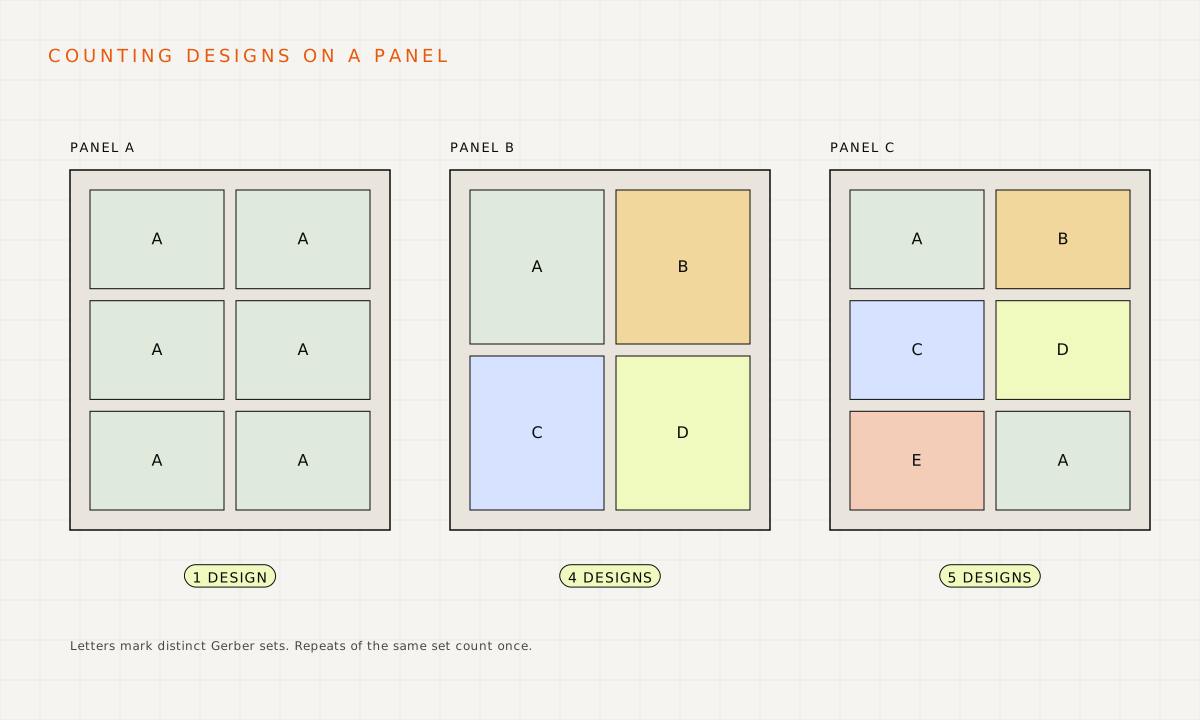
A panel can carry more than one board design. The count that matters for quoting is the number of different Gerber sets merged into the panel, not the number of boards on it.
Borders and spacing
| Feature | Value | Notes |
|---|---|---|
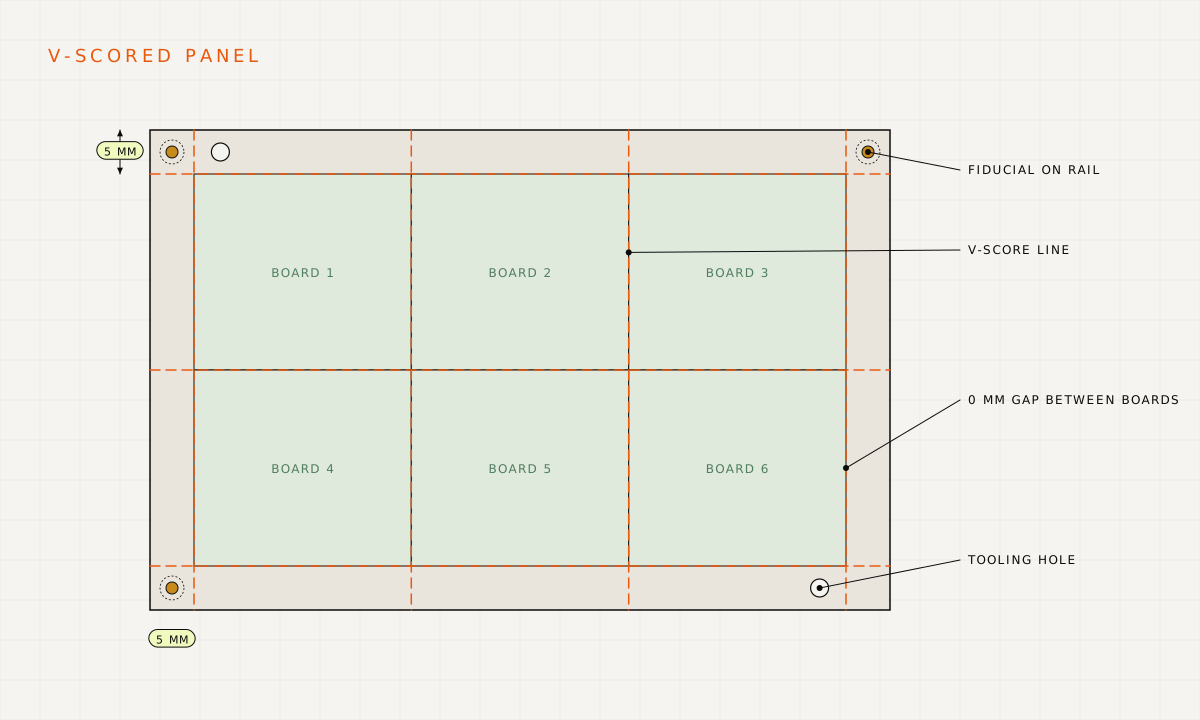
| Panel border | 5 mm minimum on all four sides | Recommended for both customer and AAVICO panels. Measured outside the 2 mm routing gap when boards are routed. |
| Gap between V-scored boards | 0 mm | Boards butt against each other and share the score line. |
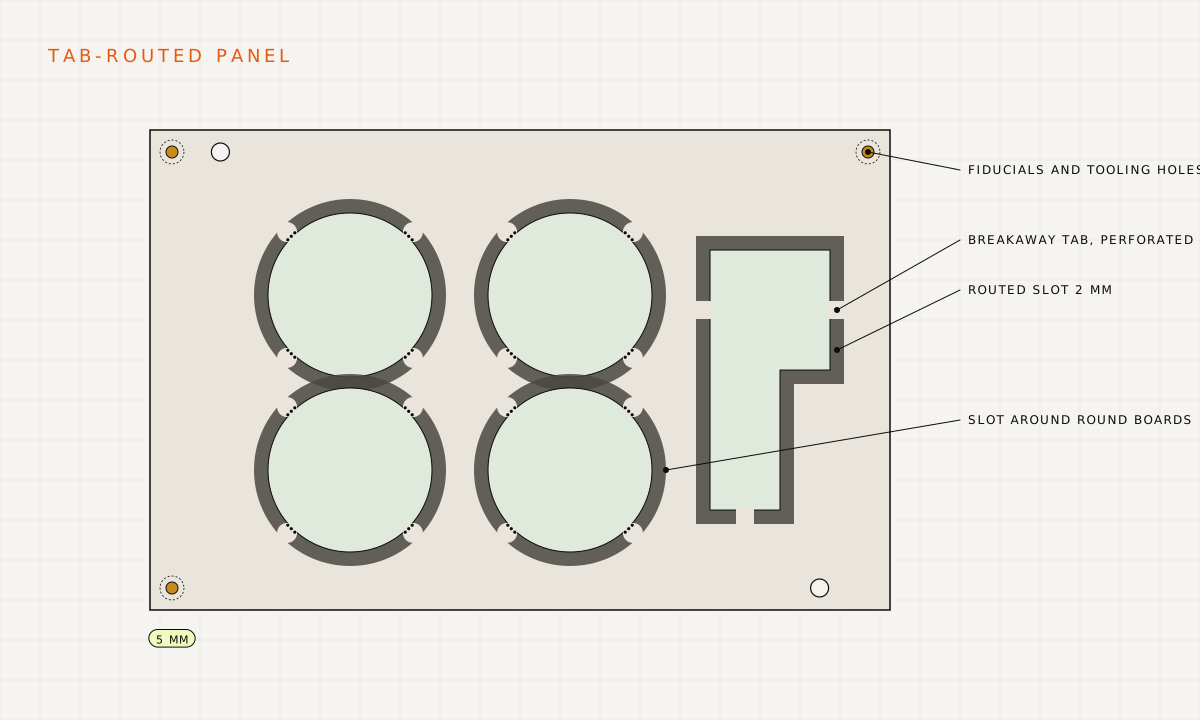
| Gap between tab-routed boards | 2 mm minimum | The width of the routing path. |
| Gap for small or round boards | 10 mm recommended | Wider webs keep small and curved boards rigid during fabrication and assembly. |
V-score or tab routing
Both methods suit panels you design and panels we design.
| V-score | Tab routing | |
|---|---|---|
| Board shape | Rectangular boards with straight edges | Any shape, including round and irregular boards |
| Gap between boards | None | 2 mm or more |
| Mixed designs on one panel | Only if the score lines line up across every design | Recommended |
| Heavy components | Preferred: the panel stays stiff until it is snapped | Possible, with enough tabs |
| Edge finish | Clean, slightly bevelled edge | Small tab remnants unless they are sanded |
| Copper clearance to the edge | Larger, because the blade cuts both faces | Smaller |
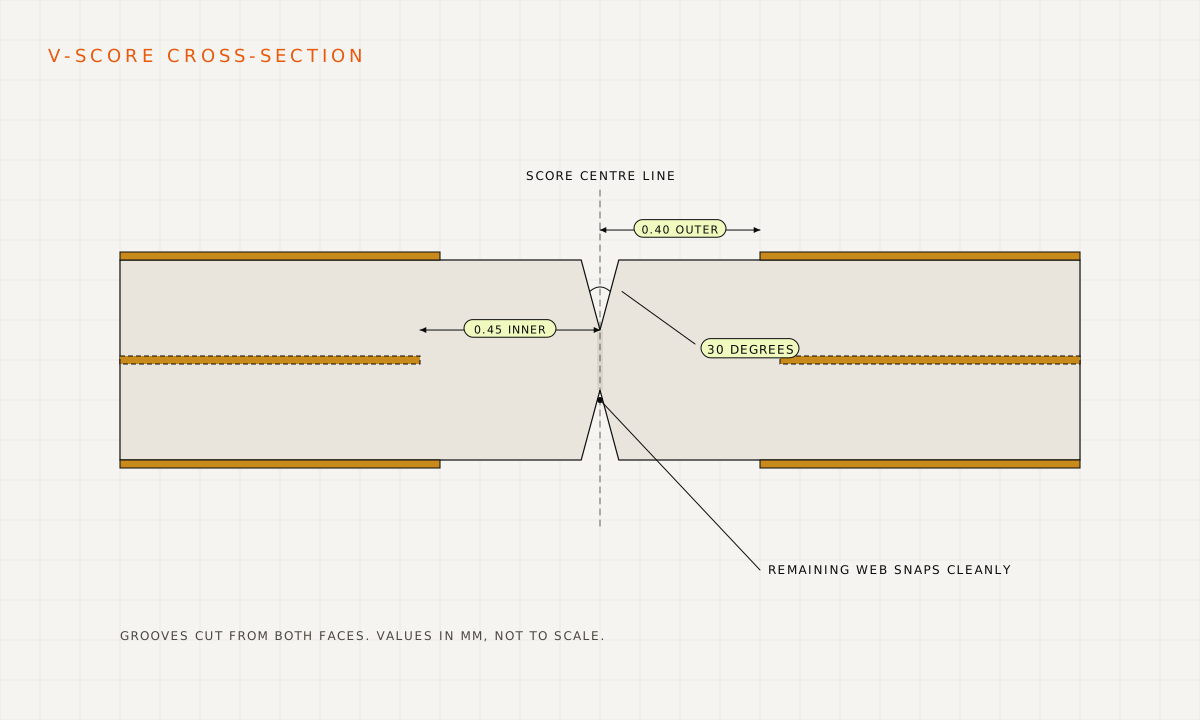
Jump scoring, where the score stops short of the panel edge so it does not run through the border, is available for rectangular arrays. Edge clearance values for routed and scored edges are on the rigid PCB capabilities page.
Panels for assembly
- Add rails on at least the two longer, parallel sides of the panel so it can ride the conveyor. Boards that are not rectangular must be assembled in a panel with these rails.
- Put fiducial marks and tooling holes on the rails. If your panel has none, we add them.
- Keep components at least 3 mm from board and panel edges, and leave space for parts that overhang a board edge.
- Tell us whether you want boards delivered separated or still in the panel.
Ready when your files are
Send your design for a quote
Upload your Gerber, drill and assembly files with the quantities you need. Our engineers check them against these guidelines and come back with a price, a schedule and any questions.